Posture Games
Development of an input device with accompanying software designed to improve sitting posture through play
Work performed while sitting is among the most detrimental activities that can be imposed on the back over the long term. Yet the seated posture is the one adopted by the majority of people in industrialized nations for their daily work (Dustmann et al. 2002, p. 25 & BAuA 2011, p. 19).
This excerpt makes it clear that the search for ways to promote healthy sitting habits is gaining importance with increasing digitalization.
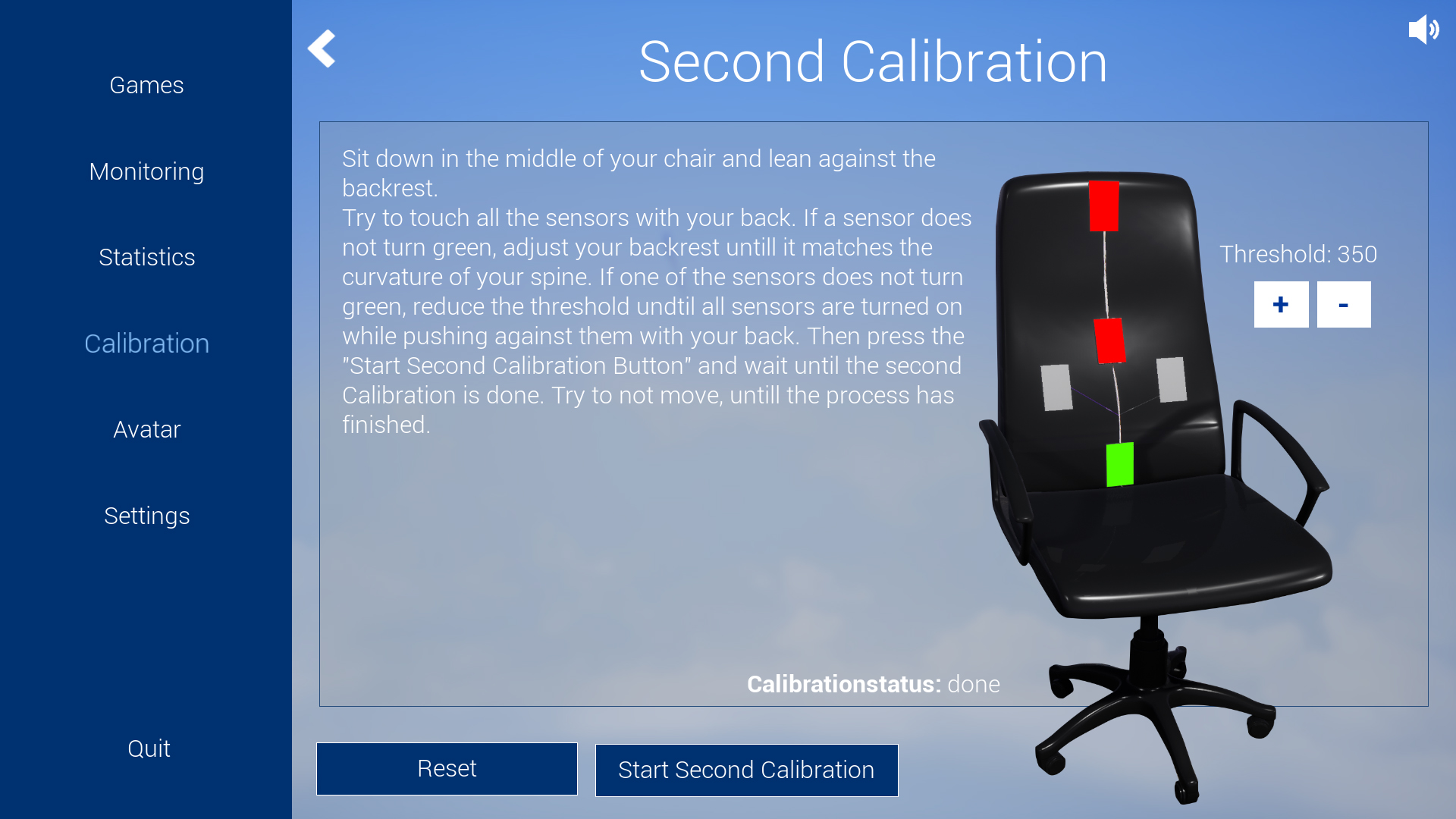
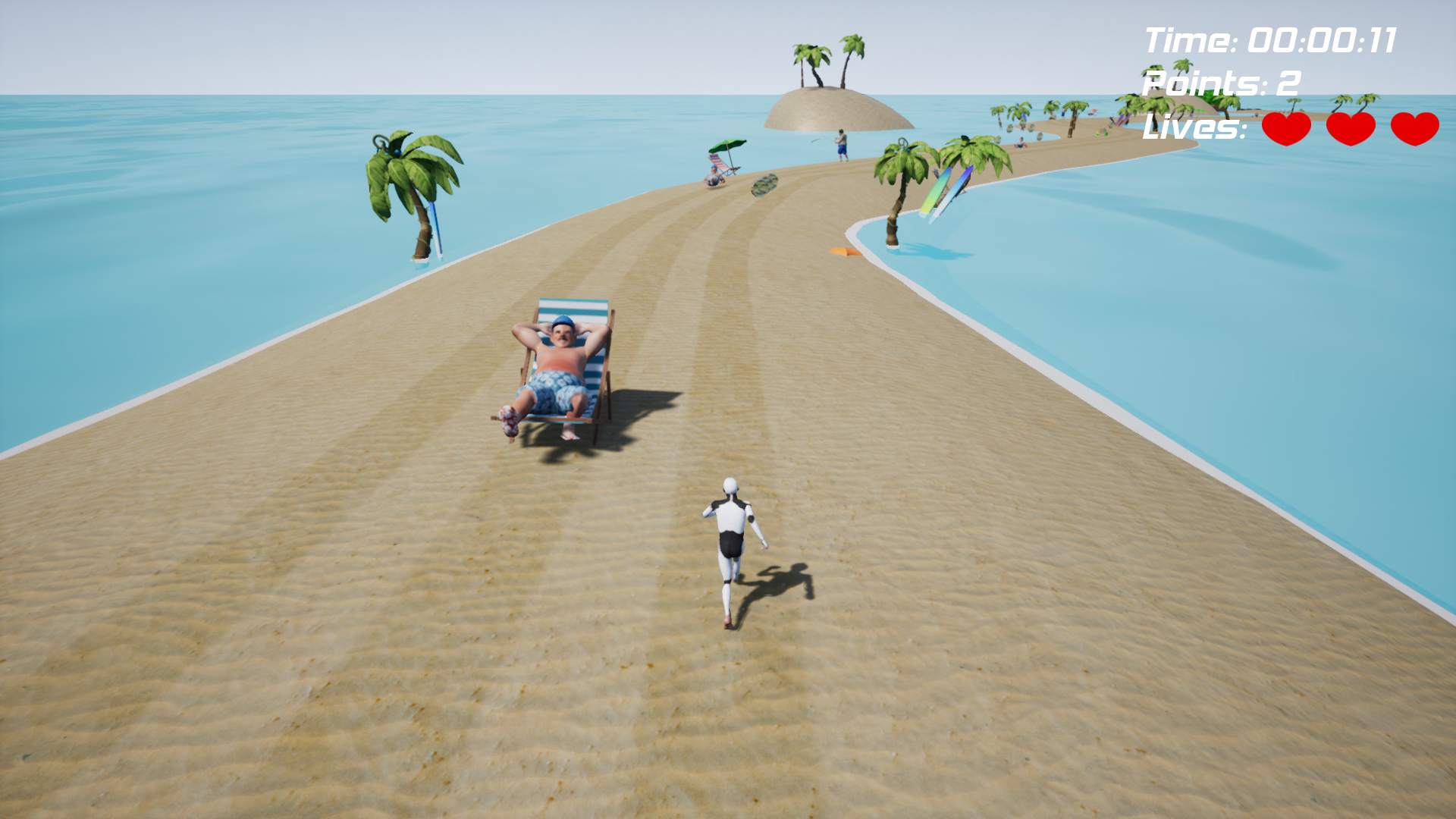
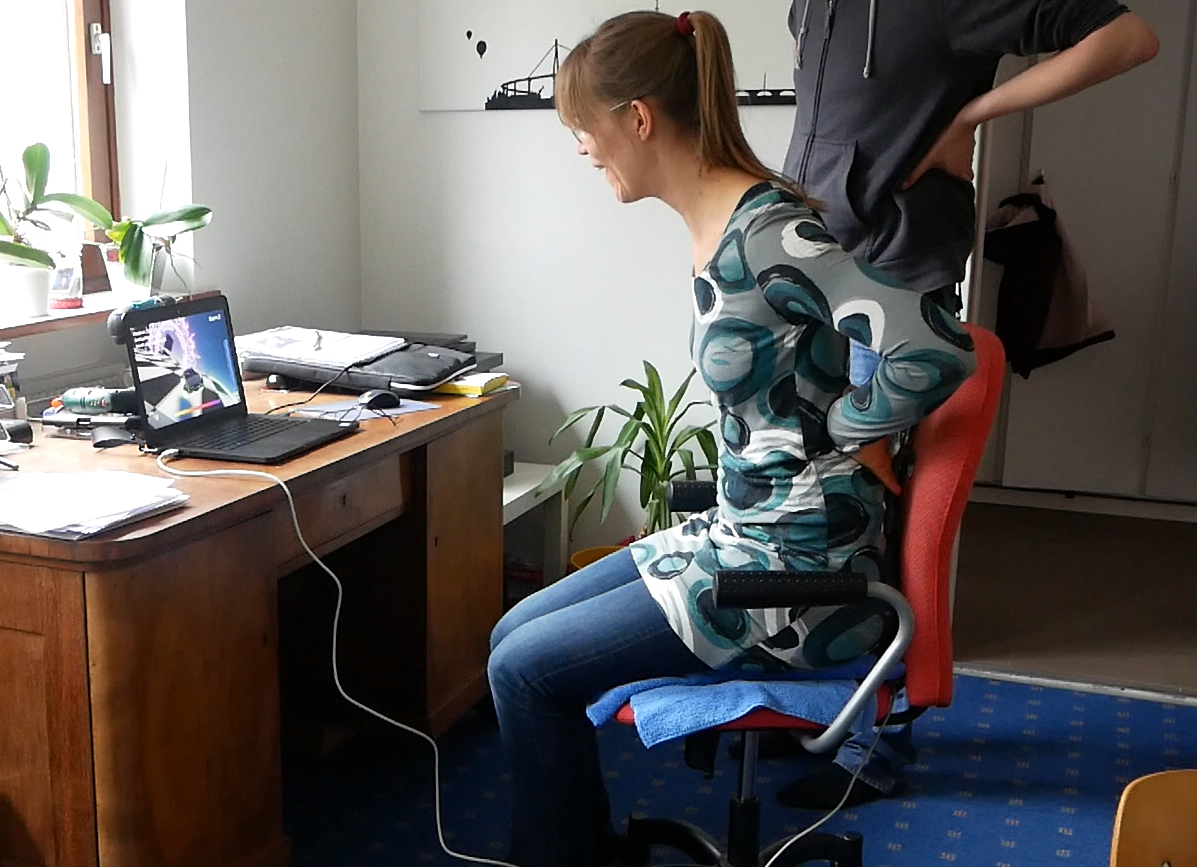
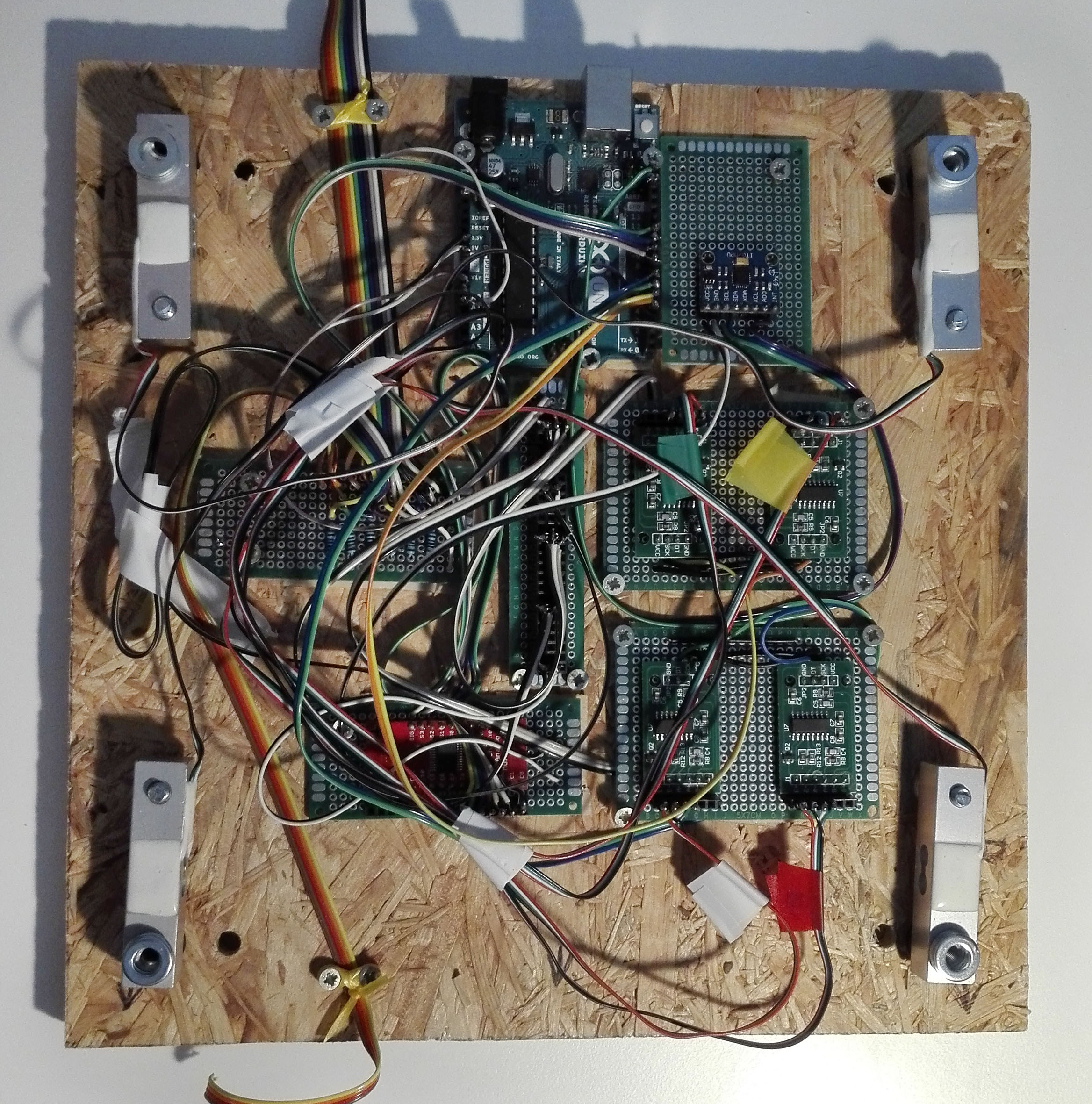
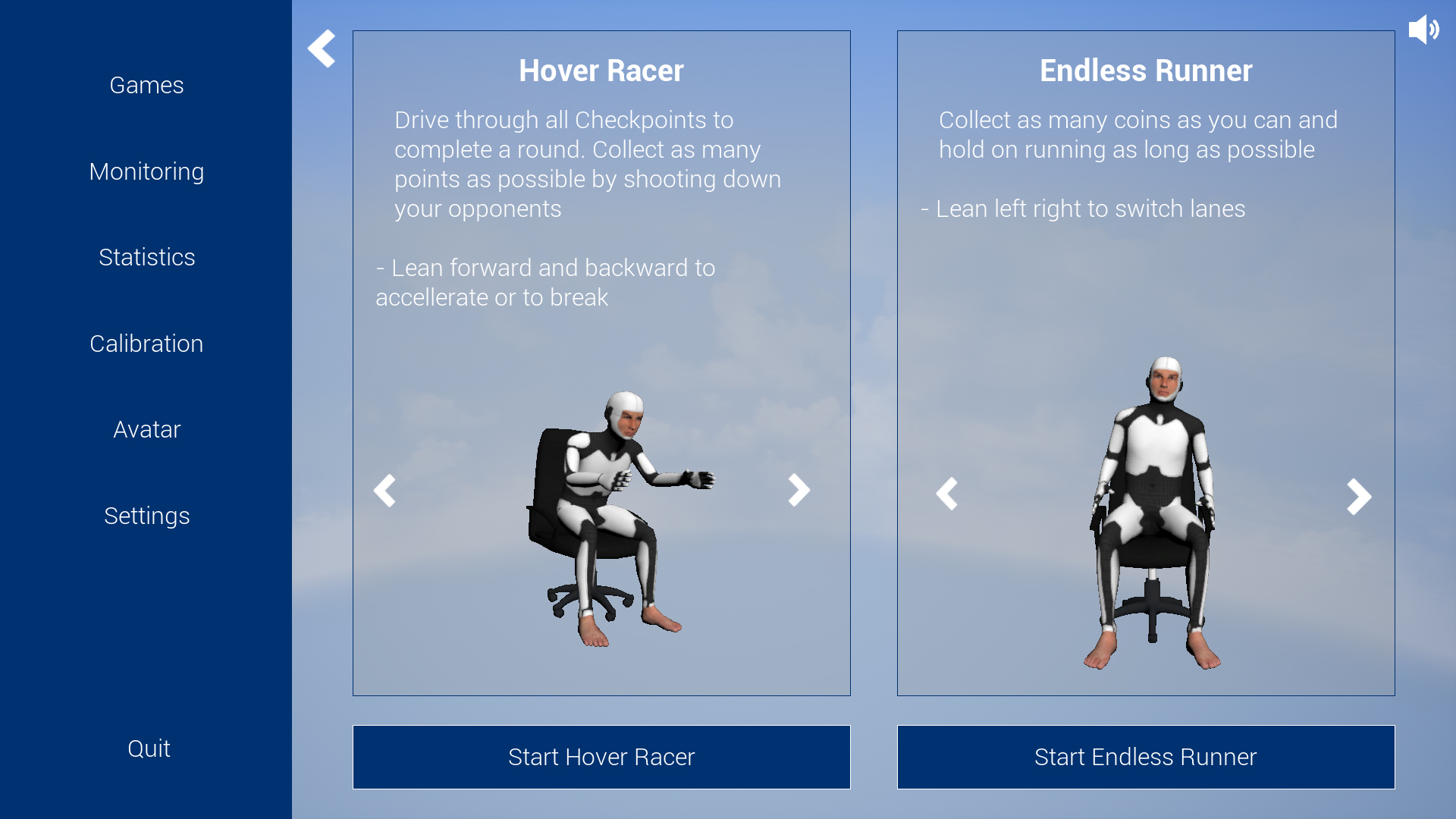
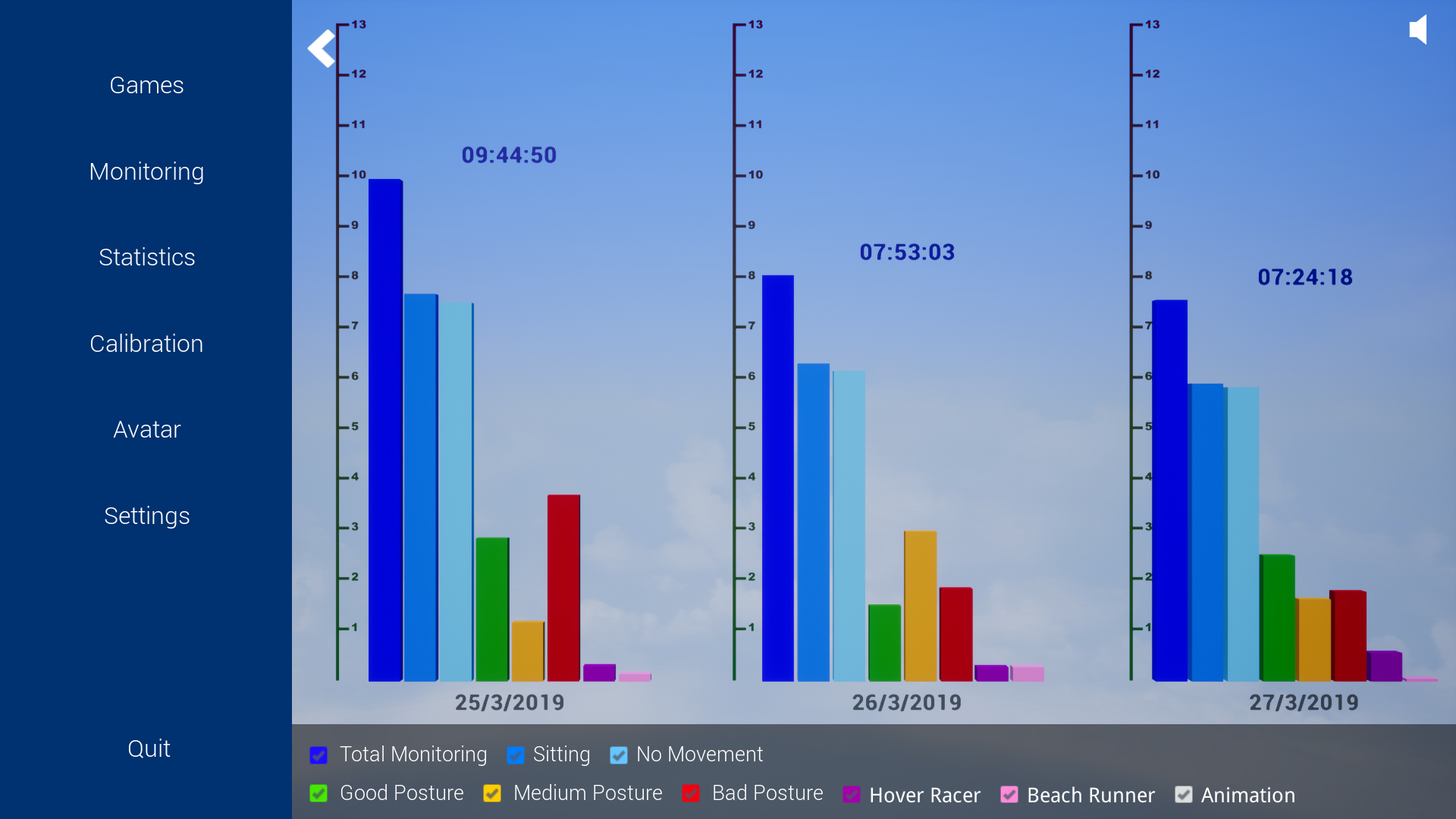
For this reason, my master’s thesis addresses the implementation of an input device that, in combination with an office chair, is capable of determining a person’s sitting posture in real time. The sensor data is processed in specially developed software and can provide the user with information about both their current and past sitting behavior. Furthermore, the system can be used to perform posture exercises in a playful manner, which are intended to help mobilize the body. The hardware includes, among other things, four load cells that determine the center of gravity of a seated person. With their help, a prediction of the sitting posture can be made, while the sensor data can simultaneously be used as input for various games.
The aim of this study was to determine how such a system could be developed, what effects its use has on sitting posture, and how it is perceived by a potential target group.
An examination of the hardware and software by two experts in the fields of orthopedics and physical therapy revealed that the combination of posture games and posture monitoring can be effective in improving sitting posture. Furthermore, tests with a potential target group yielded a positive overall impression of the system. It also became clear that the posture games can only be integrated into daily work routines to a limited extent. Based on the tests conducted and my own assessment, it can be concluded that further research, improvements to the hardware and software, and long-term testing are necessary to make well-founded statements about the system’s effectiveness and usability. Nevertheless, this thesis represents a good starting point for subsequent analyses in the field of playful posture improvement.